Scottish citizens

Breaking up a country means defining who you exclude. Despite their best efforts, the Scottish Government’s plans for citizenship prove it

Scottish independence looks further away than it has for some time — to my profound relief, for now. My identity is rooted in Scottish unionist and left-liberal English versions of Britishness. I’m not just a transactional unionist. I have no wish to be left behind by history: some latter-day, London-resident echo of a kaisertreu Austro-Hungarian after Austria-Hungary.

So perhaps I shouldn’t give the Scottish Government’s latest independence papers too much credence. Humza Yousaf is performing a shakier version of the dance Nicola Sturgeon perfected. With few concrete options, growing voter weariness and an impatient base, he must pretend to advance when he knows he cannot. But a lack of independence monomania does not equate to a lack of support. Scotland is still, at best, a narrowly pro-UK country. The national question may, with luck, be on the cusp of becoming dormant for now: it is nowhere near dead.

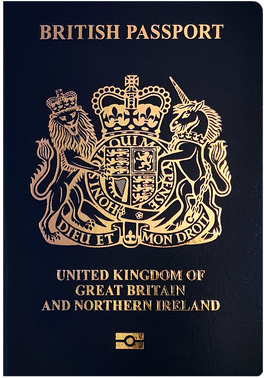
So who the Scottish Government thinks is Scottish could well matter one day — and for me, hits very close to home. It’s at pains to prove itself more liberal on citizenship than the UK Government. Unlike British nationality law, children of any nationality brought up in Scotland would be able to register as citizens. The child of a Scottish citizen would be entitled to citizenship, wherever they were born. (The British Nationality Act 1981 generally only permits this one generation down.)

By both descent and geography, this draws the boundaries of citizenship wider than the UK. But its approach to those of us already born at the point of independence is rather narrower. As you’d expect, British citizens habitually resident or born in Scotland would, by default, be Scottish citizens. British citizens with a parent born in Scotland would have the same right, as would those born in Scotland for 10 years (or five as a child).

I can understand if this sounds broad to most. But it ignores the fact that few, if any, of us plan our lives on the basis of the breakup of our state. This is a problem of which both my sister and I would fall foul. Our father is Scottish; our mother is English. We were both born in Norway. Dad worked in oil and gas: a common enough choice for someone who graduated from Aberdeen, where he met Mum. We’d lived in Scotland, the United States, Venezuela and England by the time we turned 18. As a result, we wouldn’t meet the five- or 10-year criteria.

To add to the mix, Dad is one of a line of Scots who worked around the world. My grandfather, born and brought up in Scotland, worked for Shell. As a result, Dad, who went to school and university in Scotland and started working there, was also born abroad. (The English half of my family also travelled. The only reason applying for a British passport isn’t an all-consuming nightmare for me now is that my mother was — just about — born in England, not overseas.)

Had Scotland been an independent state in 1986, I’d have been the child of a Scottish citizen, and entitled to citizenship in my turn. But it wasn’t, and so the Scottish Government’s policy cuts me off from half my nationality. I see little justice in saying I’m not a Scot in due course, just because Mum and Dad didn’t plan for the break-up of Britain 45 or 50 years in advance. Scotland is where the family home is: I feel at least as Scottish as English. As a unionist, I fretted and simmered from 2011 to 2014 because ‘the English’ couldn’t see the danger.

One way to address this would be to extend citizenship rights to British citizens with at least one grandparent born in Scotland (I have two). This is broadly analogous to Ireland, which extends citizenship rights to anyone with an Irish citizen grandparent. The Scottish Government points to Ireland favourably, after all. And as British citizens could live (and then work and vote) in Scotland anyway, it makes little difference after independence. Another, broader option would be to extend rights to the children of those on the current list.

Inevitably, I hope this is all hypothetical. If it isn’t, and if I am eventually cut off from who I feel I am, I’d feel the emotional injustice profoundly. I accept nationality laws do people far more practical damage every day. I grant the Scottish Government is offering quite a broad citizenship law for a separate future. But its patchier provision for the unionist past and present expose something core to the nationalist project.

To be fair to them, they can’t entirely help it. Nations can’t exist without a definition of who does and does not belong, and how and whether that can change. But the British state and nation have been around a long time. We have no legal definition of who belongs to the older nations which formed them, because we didn’t need any. If the United Kingdom breaks up, we will need some. The question of who We are and who They are will take centre stage, by definition. The new Scottish and remaining UK states will have to decide whether to recognise the contents of different people’s hearts and minds.

When the UK narrowly voted for Brexit, losing European citizenship loomed larger than anyone expected. Perhaps the reality of losing something crystallised a sense of self many felt only hazily before. Perhaps there were always more of them (us, in my case) than we knew. But I’m pretty sure destroying a centuries-old union, with a nation tacked on, would cut far more deeply.

People who want to do it should have no illusions: they are in the business of creating a new Other and a new Them. That is what nationalism in a plurinational democracy means. No amount of liberal dressing — performative, genuine or both — can hide it.

Political religion

The blurring of tolerance for personal belief and acceptance of political positions is not an accident

What equal marriage really boils down to for the people it affects.

Same-sex relationships only received legal recognition in the UK within my adult lifetime. Equal marriage in Great Britain had to wait until I reached my late 20s; Northern Ireland held on until my early 30s. By the time it was delivered, it felt long overdue. That it commands such support, and that Britain is now (in the main) so relaxed about people like me, is an extraordinary political and social shift.

Still, a minority of opponents remains. The fact that Scotland’s Finance Secretary is among them is no surprise. The real surprise is how many of her erstwhile backers seem surprised. In any event, we now know she would have voted against equal marriage had she been an MSP. We also know she would do the same again today — though we are assured she won’t actively seek the chance to do so.

Opposing her on this basis would, you might think, be as reasonable a ground as any. Some tell us equal marriage is a settled issue and so we shouldn’t worry. But a politician’s opinion on one issue often gives a clue to how they might act on something else. We know Kate Forbes would ideally restrict the right to marriage. What would Kate Forbes as First Minister say about LGBT inclusion in schools? How would she approach conversion therapy (on which she already sounds distinctly evasive)?

More generally, we don’t usually accept ‘it’s a settled issue, so you shouldn’t worry’ when it comes to equalities. You could also describe equal pay legislation as a settled issue. I doubt ‘I would vote against equal pay today, but it’s a legal right and so I would uphold it’ would wash with anyone at all, quite rightly. And yet, a striking number of people seem happy to argue that position here.

I suspect some treat this differently for two distinct but intertwined reasons. First, there is still more room for open dislike of homosexuality than many other protected characteristics. Second, Kate Forbes’ view on the legal right to marry — not just on religions’ freedom not to perform it — is determined by her theology. Because most religions traditionally regard same-sex relations as sinful, some see her view on gay and bi people’s marriage rights as a matter of private conscience.

Sir Tom Devine said, ‘If Kate Forbes is hounded out of the opportunity to obtain high office in our country because of her personal beliefs we can no longer be seen as a tolerant and progressive nation.’ One might note that being the Scottish Finance Secretary is hardly a junior role. Even setting that aside, this is absurd. First, declining to vote for or endorse a candidate you disagree with is the very stuff of politics. Second, Kate Forbes’ personal beliefs, properly understood, are not the real risk to her ambitions. The real risk is that, given the chance, she would vote to shape the law according to her beliefs on private morality, at least some of the time.

A vote in the Scottish (or any other) Parliament is not, by definition, a private matter. In voting on a Bill, MSPs legislate for the whole of Scotland. Even when passing motions, they send a message from the Parliament to and on behalf of voters. When Kate Forbes says she would vote against equal marriage today but uphold current legal rights, she is not making a personal statement. She is making a political calculation that this is a fight she cannot win. She has given gay and bi people good reason to doubt her support for their rights, now and in future. Anyone who cares about that has every right to say as much and vote accordingly.

Does there have to be some compromise from gay people in the name of religious freedom? Yes, of course. We accept religions’ right to discriminate in who they marry, and often in who they appoint. We accept safeguards in hate crime laws to protect their right to denounce our specific sins. Bluntly, in many contexts we afford a level of courtesy to beliefs we would otherwise label rank bigotry when affirmed in the name of God.

That is tolerance in action. Do I think the belief in a requirement to follow the Word is a defence against the charge of homophobia? Frankly, no. But I accept, in the name of rubbing along together and the rights of others to live freely, that it is often better not to spell that out. And if a politician is a religious conservative, but has no wish to give that legal force, we should accept that. Forbes’ views on sex outside of marriage are personal: she does not wish to force them on the rest of us. The same goes for Tim Farron, who should have been treated more kindly, and equal marriage.

Forbes’ defenders, however, ask more of me. They imply I should, in the name of tolerance, give a politician a pass on the civic rights of people like me — to treat opposition to those rights more gently than I otherwise would when affirmed in the name of God. But whether and how far religion should shape the law on private morality is political. The claim that opposing a candidate when they cite their faith to justify their policy is somehow ‘intolerant’ is also political. It demands some deference to politicians’ views if, and only if, they cite a religious basis for those views. It is not a call for tolerance: it is a call for religious privilege.

Neither religions nor their adherents can have it both ways — though plenty will try. Those Anglicans in England who express horror when MPs step into their Church’s rows over sexuality, but want to keep their bishops in Westminster and their special status in law, are playing a similar trick. Where politicians want to legislate in the name of God, they place His relevant dictates in the political realm. Yes, secular atheists should be more careful to respect the place of private conscience. But the religious have no right to turn that into political impunity in disguise.

This post was originally published on Medium.com on 25 February 2023.

The union state and the social contract

Scottish nationalists who claim the UK will fund pensions after independence or ask why no independent country wants to return to it miss the point. National bonds matter

Crown copyright, used under fair use and taken from Wikipedia.

The debate over Scottish independence is filled with wearying, recurrent rows. Currency, borders, fiscal transfers, the UK home market, EU membership: the list goes on. Until recently, responsibility for state pensions did not feature. That changed when Ian Blackford asserted ‘a right to a UK pension, no ifs and no buts’ and that Westminster had an obligation to pay them, come what may.

Unionists have since made their incredulity clear. Meanwhile, some nationalists have retreated from motte to bailey, pointing to the need to split assets as well as liabilities. But there are no ‘assets’ to speak of here. State pensions are not funded; the contributory principle is a polite fiction. The National Insurance Fund holds enough money for a couple of months of state pensions. The reality is that state pensions are a benefit the state pays and chooses to link to NI records. If Scottish independence means anything, it means leaving the UK’s benefits system. Nationalists usually make a point of that, after all.

Who becomes a Scottish or UK pensioner after independence could indeed be tricky. Expatriates, people who worked across the UK and people who paid to top up their NI records are real people, who must be assigned to a state to pay out or not. But while the detail is complex, the underlying principle is simple. At present, the UK pays a state benefit to current pensioners, funded by current taxpayers. If Scotland leaves the UK, its taxpayers are no longer in on the deal. It will have to reinstate that deal between a smaller set of workers and a smaller set of pensioners. Not for the first or last time, the SNP is exploiting complex details to blur simpler truths.

Let’s imagine Scotland offered to pay for access to UK pensions for those who had paid UK contributions. (We can ignore EU law for now, pending any potential Scottish accession.) London has no reason to agree to that if Scottish people are no longer British citizens. There is nothing to gain and a little to lose fiscally. It would complicate any future UK pension reform until the last transitional pensioner passed away. It is a non-starter: in effect, it is 2014’s sterling currency union all over again.

The process of making an absurd statement, claiming to be misunderstood, offering opaque ‘explanations’ so confusion remains and crying ‘scaremongering’ to cover your tracks is familiar enough in this debate. So is painting the UK as an overbearing behemoth set to become a paragon of forbearing once Scots vote to leave it. But this saga betrays a lack of comprehension as well as candour. Despite its raison d’être, Scottish nationalism has forgotten that shared citizenship matters.

To be clear, state pension entitlements are not themselves a question of citizenship. But the social contract which makes them tenable very much is. In the main, a country’s workers pay for its pensioners. We’re almost all going to be old one day; we recognise a mutual obligation to our fellow citizens. But that obligation is, in the main, defined by the compass of the state. Expatriates, frontier workers and so on are exceptions who prove the rule.

A longstanding nationalist trope makes much the same point. It shows a map of former British territories with their independence dates, and asks: has a single one asked to return to British rule? Of course, being a British colony and being an integral part of the UK are different things. Still, on their own terms, they’re right. The answer is ‘no’ (I’ll ignore the temporary and anomalous case of Newfoundland), and that says something important. But it’s something important to the case for the British union, not against it.

The reasons none of these countries would even consider weighing up a shared state over their own state are simple. The UK’s institutions have long ceased to be their institutions in their eyes (or they never were). Their interests are not inherently, or even particularly closely, linked to the UK’s. Above all, the British people are not their people anymore (if and to whatever extent they ever were). Polite fictions of Commonwealth citizenship aside, we are foreigners now. As such, they have no wish to pool their fate with us. Were Scotland to leave the UK, I am sure it would never ask — or be asked — to rejoin. That does not argue for independence. It shows that the Union’s mix of British national solidarity and Scottish national distinctiveness is rare indeed.

Forging that mix took decades. In the seventeenth century, English MPs were wary at best of forming a new kingdom. Scottish politicians considered British relations rather more often. Still, it took a succession crisis to bring matters to a head in England and hard bargaining to accommodate interests in Scotland. It was well into the eighteenth century when the incorporating but limited Union of 1707, before mass democracy and the welfare state, began to take popular hold. The Union between Great Britain and Ireland never secured the same loyalty among most in Ireland or the same investment in Great Britain. So-called Imperial Federation with the then Dominions never got very far.

On our own continent, the European Union has gone further than most to get states to pool destinies. It is noble in principle, for all its faults in practice, and a project worth supporting. But the eurozone’s travails show its limits. Germany and Greece won’t underwrite each other as Galashiels and Greenwich do. NATO offers its members a defence guarantee — one which, so far, hasn’t been tested. But its members squabble over defence spending. US commitment gives Europeans cause for concern. Public opinion is often queasy at best about following through if required.

In short, nothing approaching the kind of mutual backing within the United Kingdom is available to Scotland outside it. Unionists are right: if Scots cease to be British, pensions and pensioners will become a responsibility to disentangle, and the UK will have no part in pooling Scotland’s risks. Nationalists are right: if Scotland leaves the UK, it will never seek to return, however hard the road. In both cases, that is what cutting bonds of citizenship and sentiment means.

At its heart, that is what Scottish independence means. That remains true, for all the talk of European nationhood. It remained true when Winnie Ewing said ‘Stop the world, Scotland wants to get on!’ (She campaigned against the EEC in 1975, before the SNP’s change of heart.) It remains true when some try to obscure it by painting ‘Brexit Britain’ as a xenophobic backwater. Internationalism is sometimes the means; nationalism is always the end. And once you turn erstwhile fellow citizens into the Other, there is no going back — on either side.

This post was originally published on Medium.com on 21 February 2022.